Regular avocado consumption was linked to a 28% lower risk of diabetes1.
Associations Between Avocado Intake and Lower Rates of Incident Type 2 Diabetes
Research Summary
- Adults with Hispanic/Latino ancestry who consumed avocado were less likely to develop type 2 diabetes than those who did not consume avocado at baseline, especially if they had prediabetes at baseline.
A study of over 6,000 Hispanic adults found that regular avocado consumption was linked to a 28% lower risk of diabetes for the overall study population. The Avocado Nutrition Center supported the research based on two 24-hour dietary recalls. The results suggest avocados may have a role in blood sugar management and promoting a healthy lifestyle that reduces the risk of type 2 diabetes, but the findings are not causal and cannot be generalized to all populations.
As you know, unlike most other fruits, avocado contains zero grams of naturally occurring sugar per serving and does not affect the glycemic response. Learn more about the growing body of research on avocado’s role in type 2 diabetes risk reduction and management by downloading the fact sheet.

Quick Guide: Natural vs. Added Sugars
Help your clients know the difference.

Quick Guide: Natural vs. Added Sugars
Help your clients know the difference.
Share this guide with clients at risk for or living with type 2 diabetes, to support them toward healthy eating habits, reducing added sugar intake and enjoying recipes that skip the added sugar without sacrificing sweetness.
Quick Ways to Start the Conversation
Healthy eating patterns associated with improved type 2 diabetes outcomes include plenty of fruits and vegetables and unsaturated fats. As you collaborate with clients on making diet-related changes, this collection of free resources can support them on their journey toward blood sugar targets.


Type 2 Diabetes Mini Cookbook
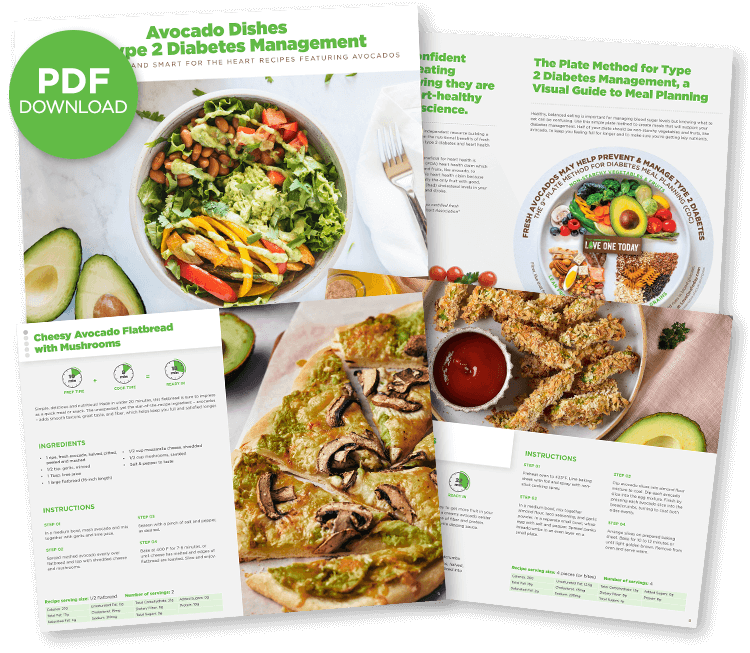
Type 2 Diabetes Mini Cookbook
Packed with delicious, diabetes-friendly recipes, this mini cookbook highlights how simple ingredient swaps — like adding avocados for nutrients such as fiber and heart-healthy fats — can help keep blood sugar levels on target.