According to the Centers for Disease Control and Prevention, childhood obesity remains a critical public health challenge, affecting nearly 20% of U.S. youth aged 2–19.
The multifactorial etiology involves genetic, behavioral, and environmental influences, of which dietary patterns play a central role. Addressing this issue requires a shift toward nutrient-dense, whole foods as part of balanced eating patterns.
With their unique nutritional profile, avocados may serve as a valuable component in such strategies.
The Role of Diet Quality in Obesity Prevention
Improving overall diet quality is a cornerstone in preventing childhood obesity. Poor diet quality, characterized by high intake of refined grains, added sugars, and saturated fats, correlates strongly with obesity in youth (Segovia-Siapco et al., 2021). Conversely, dietary patterns emphasizing fruits, vegetables, fiber, and healthy fats are associated with better weight outcomes and metabolic health in adults (Petersen et al., 2024).
The Dietary Guidelines for Americans (DGA) emphasize small dietary shifts to include more nutrient-dense foods and healthy fats. Avocados are considered a nutrient-dense fruit and a source of good unsaturated fats.
Avocados and Diet Quality in Children and Adolescents
The Teen Food and Development Study found that adolescents who consumed avocados had significantly higher diet quality scores (DQI-I) and higher intakes of fiber, magnesium, potassium, and vitamins A, C, E, and folate. However, avocado intake was not associated with BMI z-scores, waist-to-height ratio, or body fat percentage, suggesting that avocados can be enjoyed within the context of a healthy dietary pattern (Segovia-Siapco et al., 2021).
Satiety and Appetite Regulation
Avocados may help support weight management in part by influencing satiety hormones. Randomized crossover trials in overweight adults found that meals with avocados modulated peptide YY3–36 (PYY3–36), glucagon-like peptide-1 (GLP-1), and gastric inhibitory peptide (GIP). These hormones are associated with appetite suppression and correlated with lower hunger and higher satisfaction ratings measured by visual analog scales (Haddad et al., 2023; Zhu et al., 2019).
Although this evidence is from adults, the hormonal pathways involved in satiety apply broadly. They may similarly affect children’s eating behaviors, mainly if avocados are used to replace refined carbohydrates or energy-dense snacks.But, due to study limitations, more research is needed to better understand the role of avocados on satiety in kids.
Avocados in DASH and Mediterranean-Inspired Diets
A randomized controlled triple-blinded trial found that 60 Iranian children aged 8–12 years with obesity or overweight assigned to a DASH-style diet for 8 weeks had significantly reduced body weight, waist circumference, skinfold thickness, and BMI compared to a control group. These results reinforce the benefits of fiber-rich diets, fruits, and unsaturated fats (Rasaei et al. 2025).
Avocados align with DASH principles regarding vitamin and mineral density, fiber content, and low sodium and saturated fat levels.
Visceral Fat Distribution and Cardiometabolic Indicators
Although not conducted in children, a 12-week clinical study of 105 overweight or obese adults found that consuming one avocado per day with a meal, compared to no avocado, reduced visceral adipose tissue (VAT) and the VAT to subcutaneous abdominal adipose tissue ratio in women but not in men. Glycemic outcomes were not affected (Khan et al. 2021).
Additionally, a six-month study of 969 American adults with elevated waist circumference investigated how eating one avocado daily affects cardiovascular health using a modified version of the American Heart Association’s Life’s Essential 8 (LE8) score. While the composite LE8 score did not change, avocado consumption improved diet quality and enhanced sleep health. It reduced LDL-C and total cholesterol levels compared to those who maintained their usual diet (Damani et al. 2025). Although the study was not conducted with adolescents, a 2021 meta-analysis of 33 studies involving over 57,000 children found strong associations between reduced sleep duration and higher obesity risk. Sleep duration was linked to changes in BMI, with longer sleep duration identified as a protective factor against obesity (Deng et al. 2021).Further research is needed to understand whether avocado consumption may improve sleep health and impact body weight in children.
Cultural and Behavioral Integration of Avocados
In an integrative review, culturally tailored plant-based interventions, including avocado consumption, improved pediatric dietary patterns and cardiovascular risk profiles. These programs often relied on community and family support to drive nutritional changes, vital in sustainable childhood obesity prevention (Koh et al., 2025).
Nutritional Highlights of Avocados
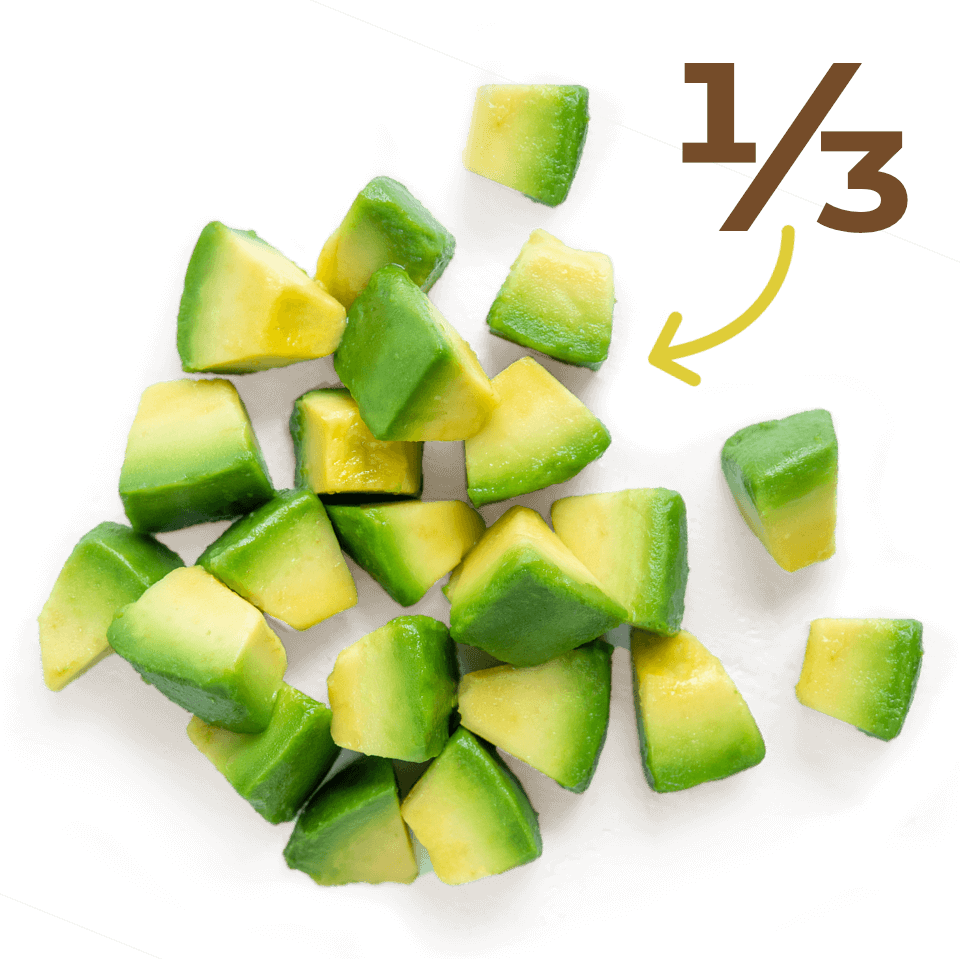
Fresh Hass avocados are a nutrient-dense fruit with approximately 80 calories per 50 g serving (one-third of a medium avocado). Each serving provides 3 g fiber (11% DV) and 6 g unsaturated fats and is a good source of folate, vitamin K, and pantothenic acid. They also provide potassium (6% DV), vitamin E (6% DV), and vitamin C (4% DV).
Portion and Practical Use
According to MyPlate and DGA guidance, one avocado counts as 1 cup of vegetables. Children 2–3 years old need 1 cup/day of vegetables, and adolescents up to 4 cups/day, depending on age, sex, and activity.
Avocados can be easily integrated into child-friendly meals and snacks—added to toast, tacos, smoothies, or used as a dip. Their mild flavor and creamy texture make them highly adaptable to pediatric preferences.
Limitations and Need for Further Research
Though current evidence supports the association between avocado intake and improved diet quality, the effects on obesity risk and weight loss in children remain inconclusive. Most available studies are observational or based on adult trials, limiting generalizability to pediatric populations.
Most of the work was funded by the Avocado Nutrition Center, and further long-term pediatric trials are needed to assess direct impacts on adiposity, insulin resistance, and behavior in children. Additionally, research should consider sex-specific responses, as suggested by studies showing divergent metabolic effects of avocado consumption between boys and girls.
Conclusion
Avocados may help prevent childhood obesity by improving diet quality, increasing satiety, enhancing sleep health, and supporting DASH and Mediterranean-style eating patterns. While causality has yet to be firmly established, their integration into pediatric diets is nutritionally justifiable and culturally adaptable.
Health professionals can responsibly recommend avocados as part of broader dietary shifts toward whole, plant-rich eating patterns.
References: 1. Segovia-Siapco et al., 2021. 2. Petersen et al., 2024. 3. Haddad et al., 2023. 4. Zhu, et al. 2019. 5. Rasaei, et al. 2025. 6. Khan, et al. 2021. 7. Damani, et al. 2025. 8. Deng, et al. 2021. 9. Koh et al., 2025.