The benefits of staying active can be profound. Active individuals feel better, sleep better, and function better. Strong evidence suggests physical activity reduces the risk of many diseases and conditions.
The CDC recommends that adults achieve at least 150 minutes of moderate-intensity physical activity, and 2 days of strength training a week. More simply stated, “move more and sit less”. However, sedentary lifestyles are on the rise. Inactive individuals are at greater risk for chronic diseases and lower quality of life. The CDC estimates that half of American adults do not meet the physical activity recommendations—and Hispanics are reported to have the highest levels of physical inactivity. Unfortunately, physical inactivity is steadily rising.
Movement alone is not enough. Physical activity and nutrient-dense dietary patterns are the dynamic duo of healthy living. The current Dietary Guidelines for Americans recommends meeting food group needs with nutrient-dense foods and beverages, staying within calorie limits, while avoiding foods high in added sugars and saturated fats. However, it is difficult for most people to adopt these health-promoting lifestyle changes. There are many personal, environmental, and cultural barriers that make healthy changes challenging.
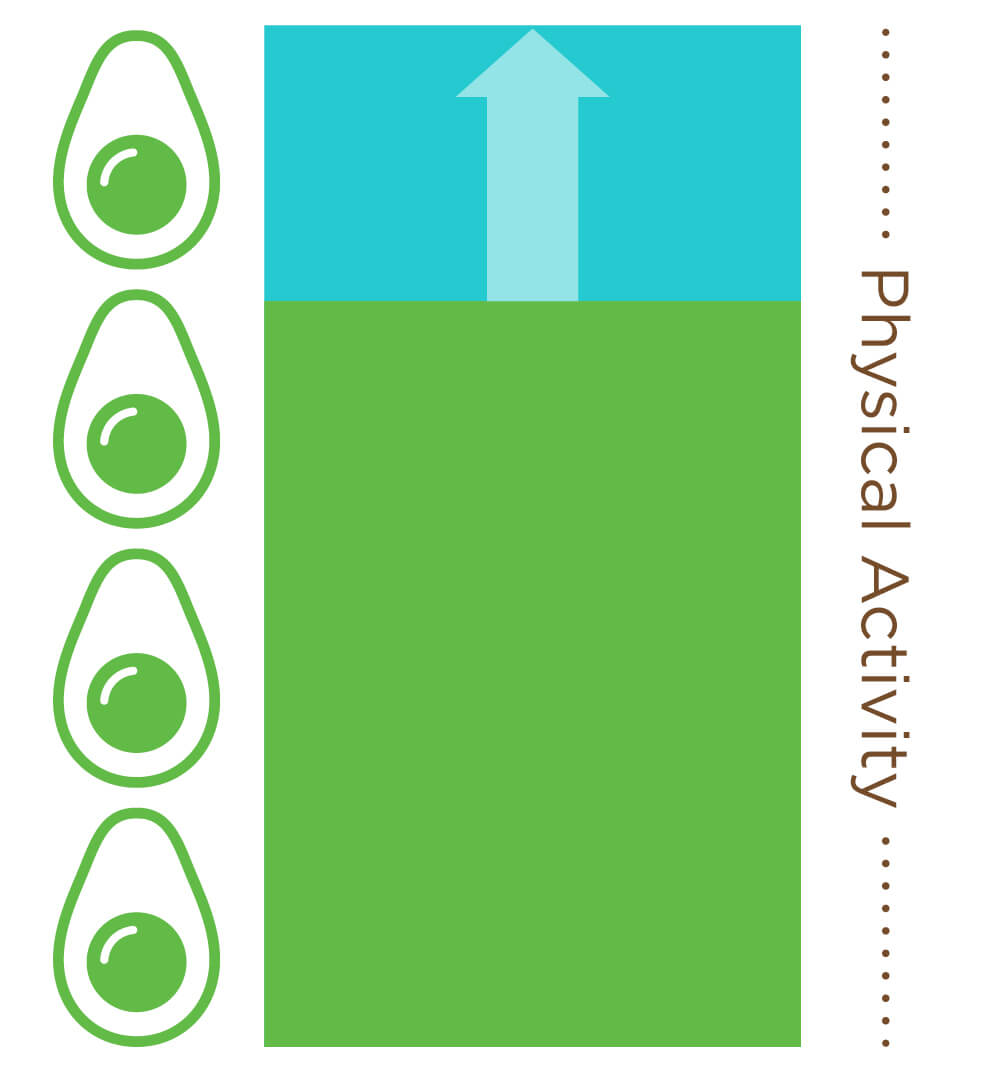
Interestingly, a recent study published in the American Journal of Preventative Medicine found that avocados increase physical activity in Hispanic families. Findings from this randomized controlled trial involving 72 Hispanic families show that increased avocado consumption was associated with higher reported levels of physical activity over six months.
The researchers found that eating roughly 4 avocados per week, compared to 1 to 1.5 avocados a week, led to an uptick in reported physical activity within Hispanic families.
These findings align with several other research studies suggesting that avocados are a valuable part of a healthy lifestyle. The study received funding from the Avocado Nutrition Center, and more research is needed to understand how the results apply to other populations.
Nevertheless, an important question remains: how can avocado consumption lead to increased activity?
The researchers of this study found that the improved physical activity levels in the avocado intervention group were not due to changes in overall calorie consumption. Counterintuitively, previous data from this study reported that the avocado intervention group actually consumed fewer calories, so they didn’t get their energy boost from additional calories consumed. The researchers speculated that nutrient density, specific nutrients, and pleiotropic effects of avocado intake may support higher physical activity levels. Or in other words, consuming avocados may lead to other health outcomes—but more research is needed to understand why. Regardless, it seems that in at least a Hispanic population, consuming avocados could be one small step that may have a bonus impact towards healthy living.
References:
1. CDC (2022). Adult Physical Inactivity Prevalence Maps. https://www.cdc.gov/physicalactivity/data/inactivity-prevalence-maps/index.html#overall
2. CDC (2020). Adult Physical Inactivity Prevalence Maps by Race/Ethnicity 2015-2018. https://www.cdc.gov/physicalactivity/data/inactivity-prevalence-maps/2015-2018.html
3. 2018 Physical Activity Guidelines Advisory Committee Report. (2018).
4. Dietary Guidelines for Americans 202-2025. A https://www.dietaryguidelines.gov/resources/2020-2025-dietary-guidelines-online-materials.
4. Allen, T. S., Doede, A. L., King, C. M. B., Pacheco, L. S., Talavera, G. A., Denenberg, J. O., Eastman, A. S., Criqui, M. H., & Allison, M. A. (2023). Nutritional Avocado Intervention Improves Physical Activity Measures in Hispanic/Latino Families: A Cluster RCT. AJPM focus, 2(4), 100145. https://doi.org/10.1016/j.focus.2023.100145