“Is it good or bad for you?”
As a cardiologist, this is one of the most
common questions I get asked about dietary fat.
Below are a few of the myths my patients often hear about dietary fat.
Common Dietary Fat Myths
Myth 1: All dietary fat should be avoided for heart health
Many people hold onto the belief that all fats are bad for their heart, but the truth is not as simple as writing off all dietary fat. In fact, the 2015 Dietary Guidelines for Americans clearly differentiates between “good” mono- and poly-unsaturated fats and “bad” saturated and trans fats, and recommends limiting intake of saturated fat to less than 10 percent of calories per day.
Limitations can sound restrictive, which is why I recommend replacing saturated fat in the diet with unsaturated fats. Evidence shows that replacing saturated fats with polyunsaturated fats in particular, is associated with a reduced risk of heart attacks and cardiovascular disease-related deaths. Unsaturated fats are, in short, the type that may help our patients prevent heart disease!
Myth 2: Dietary fat can only negatively impact blood cholesterol levels
While it’s true that saturated fat tends to increase total blood cholesterol and LDL cholesterol levels, some research suggests not all dietary fat negatively impacts our blood lipids.
In a recent review of seven scientific studies, there was a clear association between the good fat found in avocados and an increase in HDL cholesterol.1 In fact, the current body of evidence suggests that foods with higher proportions of poly- and monounsaturated fats (such as avocados, nuts and seeds, olive oil, and fatty fish) tend to increase HDL cholesterol and decrease LDL cholesterol, triglycerides, and inflammation.
Although conclusions cannot be drawn from a single scientific study, and further research is always warranted, recent trials are showing the significant benefits on cardiovascular health.
Health professionals can recommend good fats as part of a heart-healthy diet.
All that said, people don’t eat mono- or polyunsaturated fats. They eat food! This is where I tell my patients to keep it simple. Most of the fats from plants and fish are good for you, and most of the fats from animals are not.
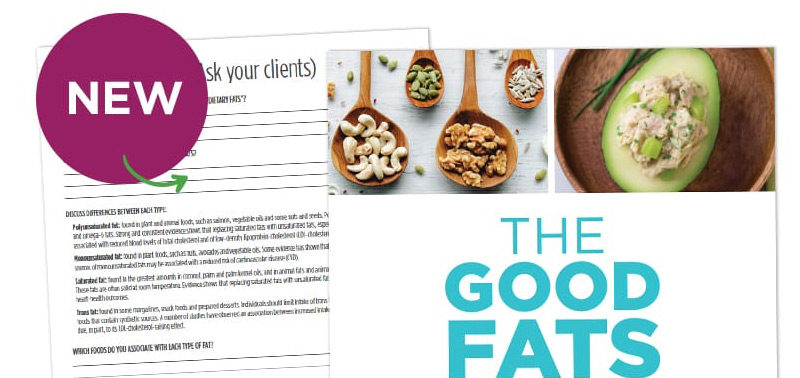
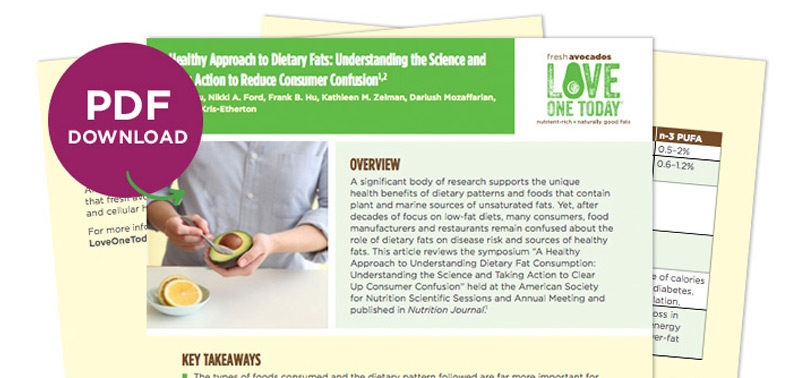
As health professionals, it’s our job to help our patients navigate complex topics like dietary fat. For more tips, download the Good Fats Workbook or read A Healthy Approach to Dietary Fats.
Love One Today® compensates the experts
1Mahmassani et al. Avocado consumption and risk factors for heart disease: a systematic review and meta-analysis. Am J Clin Nutr. 2018 Apr 1;107(4):523-536. doi: 10.1093/ajcn/nqx078.