Study Overview
Category: Healthy Living at Every Age
View Published Study
Download PDF

Background:
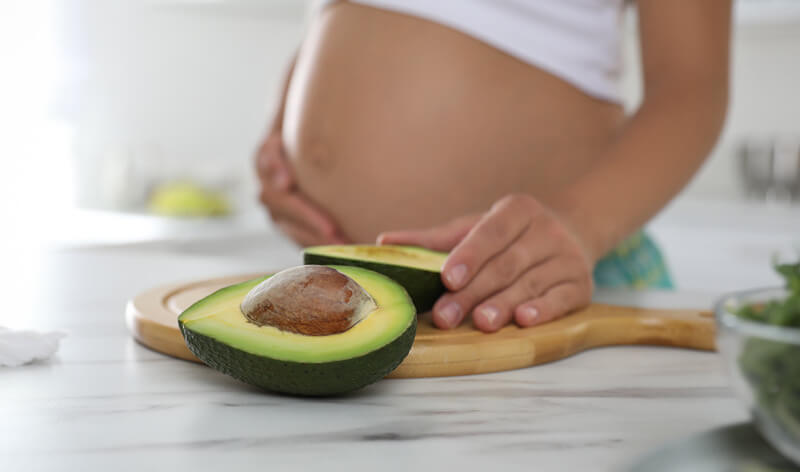
Maternal fruit and vegetable intake during pregnancy has been associated with improved pregnancy and newborn outcomes. However, the role of individual foods—specifically avocados, which are rich in key micronutrients—has not been studied in relation to perinatal health. Thus, this study aimed to examine expectant mother avocado consumption and its association with pregnancy and newborn outcomes using the Kuopio Birth Cohort (KuBiCo)—a prospective cohort study.
Methods:
Maternal avocado intake was assessed using a validated food frequency questionnaire in the first and third trimesters. Avocado consumers were defined as participants who reported consuming any avocado (> 0 g) during pregnancy, and avocado non-consumers were defined as those who didn’t report consuming any avocado (0 g). Pregnancy outcomes included preeclampsia, gestational hypertension, gestational diabetes, excessive bleeding during childbirth, and delivery by cesarean section. Early neonatal outcomes included being large or small for gestational age, low birth weight, macrosomia, preterm delivery, admission to neonatal intensive care, diagnosis of developmental disorder, and Apgar scores at 1 and 5 min. Logistic regression models were used to estimate associations between maternal avocado consumption and pregnancy and neonatal outcomes, adjusting for relevant covariates.
Results:
Pregnant individuals who consumed avocados (mean intake: 19.5 g/day) had 26.5% lower odds of undergoing a cesarean delivery compared to those who did not, even when adjusting for relevant covariates (e.g., overall diet quality). No statistically significant associations were observed for other pregnancy and newborn outcomes.
Conclusion:
Avocado consumption during pregnancy was associated with lower odds of cesarean delivery, even when accounting for potential confounding covariates.

Put Science to Practice With These Resources