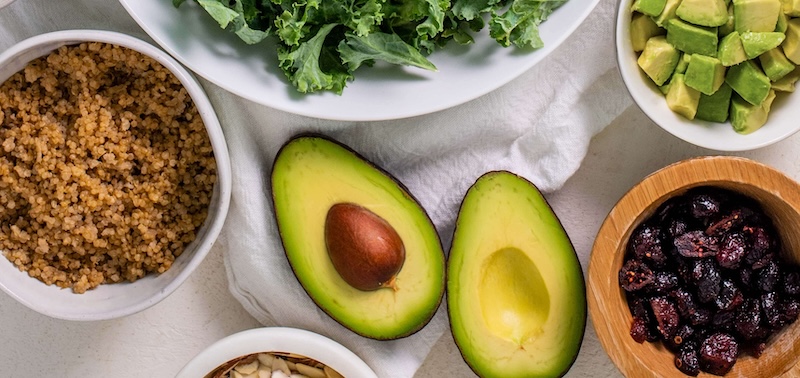
Avocados are botanically classified as fruits, specifically a single-seeded berry, because they develop from a flower’s ovary and contain a seed. Despite this, people often consider them vegetables due to their:

- Versatility:
Avocados have a subtly nutty flavor with a slight hint of sweetness when ripe. They have a buttery, creamy texture that makes them easy to incorporate into a wide range of dishes, both savory or sweet, and even beverages. - Culinary usage:
People often use avocados in savory dishes like salads, guacamole, and sandwiches, resembling vegetables in daily cooking. - Nutritional identity:
While botanically a fruit, MyPlate includes avocados as a member of the Vegetable Group based on how they are typically eaten and how their taste is described.
This mix of biological origin, culinary context, and dietary role contributes to the widespread confusion, but scientifically, avocados are fruits.
Avocados, with their creamy texture and unique flavor, often spark a debate among curious minds – are they fruits or vegetables?
The classification of avocados brings to light an intriguing intersection between culinary practices and botanical definitions. This enigmatic green fruit, scientifically known as Persea americana, challenges our perceptions and understanding of food categorization.
In short, avocados are botanically fruits and are technically considered a single-seeded berry. Nutritionally, avocados are more like a vegetable and are listed as such in the MyPlate Food Guide.

What are Fruits?
Botanically speaking, fruits encompass a diverse group of edible structures that develop from the fertilized ovaries of flowers. These structures encapsulate seeds and play a vital role in the reproduction of flowering plants. In essence, fruits serve as protective coverings for seeds and aid in their dispersal. This botanical definition extends beyond the realm of sweet and pulpy produce, incorporating various textures and tastes.
What are Vegetables?
In the culinary world, vegetables are predominantly savory plant parts that are integral components of numerous dishes. They encompass roots, stems, leaves, and even certain flowers or buds that are consumed as food. Vegetables bring a spectrum of flavors and textures to the table and serve as staples in various cuisines globally.
Culinary vs. Botanical Classifications
The discrepancy between culinary and botanical classifications of fruits and vegetables arises from their differing criteria. Culinary classification hinges on taste, usage, and culinary traditions, while botanical classification roots itself in the plant’s biological structure and reproductive process. This fundamental disparity often leads to intriguing discussions, especially when it comes to items like avocados.

Is Avocado a Fruit or a Vegetable?
A. Botanically speaking, avocados unequivocally fall under the category of … fruits.
They originate from the ovary of a flower, developing from the plant’s reproductive structures. Despite their savory and versatile culinary use, avocados align with the botanical definition of fruits due to their biological origins.
Botanical Classification of Avocado
The botanical classification of avocados as fruits is firmly based on their reproductive origin. Avocado trees produce flowers, and once fertilized, these flowers develop into the fruit we commonly enjoy. Their development from the ovary of the avocado flower solidifies their position as a fruit in botanical terms.
Anatomy of an Avocado

The anatomy of an avocado aligns perfectly with its botanical classification as a fruit. The avocado features a large seed surrounded by a creamy, fleshy pulp encased in a thick, leathery skin, also known as the “pericarp”. The pericarp is made up of three layers:
- The endocarp, the innermost layer around the seed, often thin and unidentifiable in avocados;
- The mesocarp which makes up the fleshy, delicious edible layer;
- And the exocarp which is the skin or rind on the outside.
While there are two types of fleshy fruits, known as drupes and berries, avocados fall in the latter category. Berries are known for their fleshy meso- and endocarp layers, as seen in avocados.
So contrary to popular belief, an avocado is not a vegetable it is a fruit. However, nutritionally avocados are more like a vegetable and are listed as such in the Dietary Guidelines for Americans.
Growth and Reproduction of an avocado
Avocado trees undergo a fascinating reproductive process. Flowers bloom, attracting pollinators that aid in fertilization. Post-fertilization, the avocado fruit begins its development, providing protection and sustenance to the seed within. When ripe, the fruit falls or is harvested, allowing the seed to disperse and potentially germinate to grow into a new tree.

FAQs About Avocado Classification
In conclusion, the avocado’s classification as a fruit aligns with its botanical origins, despite its common use in savory dishes. This fascinating distinction showcases the intricacies within the realms of botany and culinary practices, inviting a deeper appreciation for the complexities within our food classification systems.