
Key Takeaways:
Avocados are not high in saturated fat. Most of the fat in avocados is monounsaturated fat, a type of unsaturated fat associated with heart health. One serving of avocado contains only 1 gram of saturated fat and 6 grams of unsaturated fat. Because of this nutritional profile, avocados are commonly used as a healthier substitute for foods higher in saturated fat. Studies have shown that replacing saturated fats with avocado may help support healthy LDL (“bad”) cholesterol levels and improve overall dietary fat quality.
Fresh avocados provide heart healthy unsaturated fats, making them a nutrient dense option when replacing foods high in saturated fat. Americans consume too much saturated fat and not enough unsaturated fat. For good health, replace sources of saturated fats with unsaturated fats. Avocados naturally contain 6 grams of unsaturated fats per serving.
Avocados are a nutrient-dense, versatile fruit that can be eaten alone or used in a variety of tasty recipes, all of which can fit into a sensible eating plan.
Because of their versatility, fresh avocados can also be used as a healthier substitute for other spreads in sandwiches, on toast, or even in place of many baking ingredients to help reduce your intake of saturated fat, cholesterol, sodium, and calories.
For those looking for an alternative to the many ingredients out there that are high in saturated fats, a 50g serving of fresh avocados is cholesterol-free, sodium-free, sugar-free and only has 1 gram of saturated fat.
Do Avocados Have Saturated Fat?
Avocados naturally contain very little saturated fat. Instead, most of the fat in avocados is good fat. The Dietary Guidelines for Americans recommends replacing bad fats with good fats; good fats can help improve the intake of dietary fat without raising LDL (bad) cholesterol levels. Good fats like monounsaturated fats (MUFA) can help lower your LDL (bad) cholesterol. Keeping your LDL levels low reduces your risk for heart disease and stroke.
Research has examined the effects of replacing saturated fats with fresh avocados in controlled dietary patterns. In a randomized, double-blind, crossover feeding trial, 42 adults with elevated triglycerides followed two 3-week diets: one where a daily Hass avocado replaced solid (saturated) fats and added sugars, and a matched control diet. The Avocado Nutrition Center funded the study and cannot be generalized to larger, more diverse populations. The avocado diet lowered non-HDL (“bad”) cholesterol, triglycerides, and the total-cholesterol-to-HDL ratio, supporting avocados as a heart-healthy choice in everyday meals.
Simple Food Swaps to Reduce Saturated Fat

01
Add mashed avocado to your morning toast.
Mashed avocado adds creamy texture, mild flavor, and naturally good fats to your toast. One-third of a medium avocado, about 50 grams, has 80 calories, 1 gram of saturated fat, and provides unsaturated fats.
By comparison, 1/3 of a medium avocado (50 grams) has 80 calories and only 1 gram of saturated fat.

02
Add fresh avocado to your sandwiches and salads.
Fresh avocado brings satisfying flavor, creamy texture, and naturally good fats to sandwiches and salads. Avocados are also sodium-free, cholesterol-free, and a good source of five essential nutrients: fiber, folate, vitamin K, pantothenic acid, and copper.
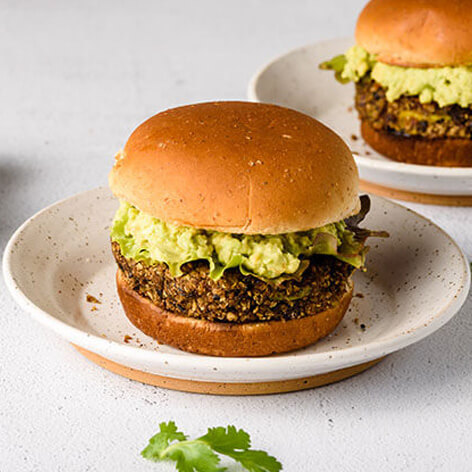
You can also substitute avocado on your burger in place of other toppings that contain saturated fat. Do this by simply layering your burger with fresh avocado. In a clinical trial of 11 participants, researchers investigated the effects that adding half an avocado to a burger patty has on inflammation and vascular health. Adding avocado to the burger led to lower post-meal inflammation and blood vessel narrowing compared to that observed after eating a burger with no avocado. The Avocado Nutrition Center sponsored the study, and although more research is needed to generalize the results to larger, more diverse populations, the findings support the growing body of evidence showing avocados are a heart-healthy fruit.

03
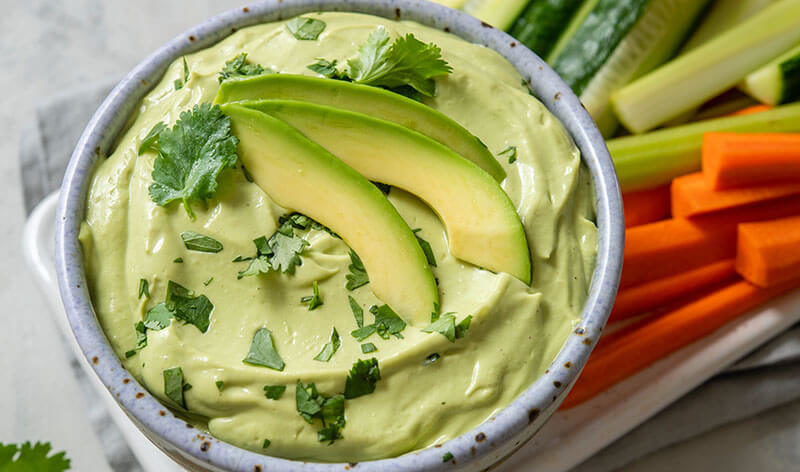
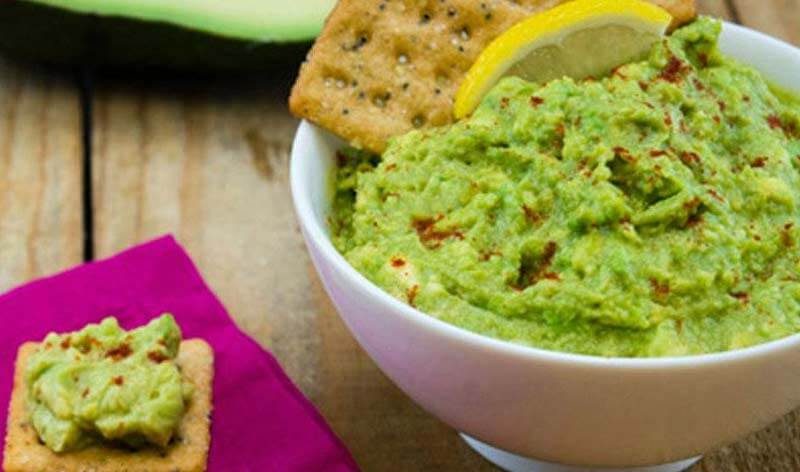
Mix up your dips with a creamy avocado alternative.
Avocado is a delicious good fat choice for dips. Avocados are a unique and healthy fruit because they contain unsaturated fat — and can act as a nutrient booster by helping increase the absorption of fat-soluble nutrients like vitamins A, D, K, and E.
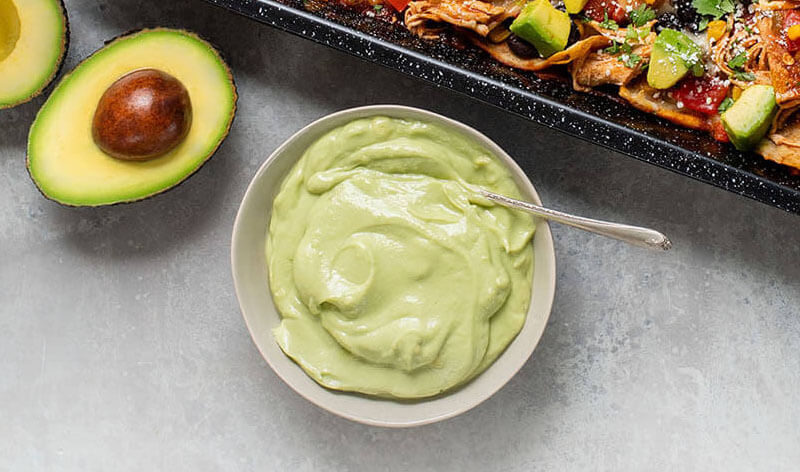
Avocados contain 6 grams of naturally good fat per 1/3 of a medium avocado. To help lower saturated fat intake, dip ingredients that are high in saturated fats can be exchanged with pureed avocados at a 1:1 ratio.
You can also substitute avocado on your burger in place of other toppings that contain saturated fat. Do this by simply layering your burger with fresh avocado. In a clinical trial of 11 participants, researchers investigated the effects that adding half an avocado to a burger patty has on inflammation and vascular health. Adding avocado to the burger led to lower post-meal inflammation and blood vessel narrowing compared to that observed after eating a burger with no avocado. The Avocado Nutrition Center sponsored the study, and although more research is needed to generalize the results to larger, more diverse populations, the findings support the growing body of evidence showing avocados are a heart-healthy fruit.
Spread & Dip Nutritional Comparison1
FRESH AVOCADO
Serving Size: 50g
Calories: 80
Total Fat: 8g
Sat Fat: 1g
Cholesterol: 0mg
Sodium: 0mg
BUTTER
Serving Size: 1 Tbsp
Calories: 100
Total Fat: 12g
Sat Fat: 7g
Cholesterol: 30mg
Sodium: 90mg
SOUR CREAM
Serving Size: 2 Tbsp
Calories: 45
Total Fat: 4.5g
Sat Fat: 3g
Cholesterol: 10mg
Sodium: 10mg
MARGARINE
Serving Size: 1 Tbsp
Calories: 100
Total Fat: 11g
Sat Fat: 2g
Cholesterol: 0mg
Sodium: 95mg
CHEDDAR CHEESE
Serving Size: 1oz (1 slice)
Calories: 110
Total Fat: 9g
Sat Fat: 5g
Cholesterol: 30mg
Sodium: 180mg
REGULAR MAYONNAISE
Serving Size: 1 Tbsp
Calories: 90
Total Fat: 10g
Sat Fat: 1.5g
Cholesterol: 5mg
Sodium: 90mg
04
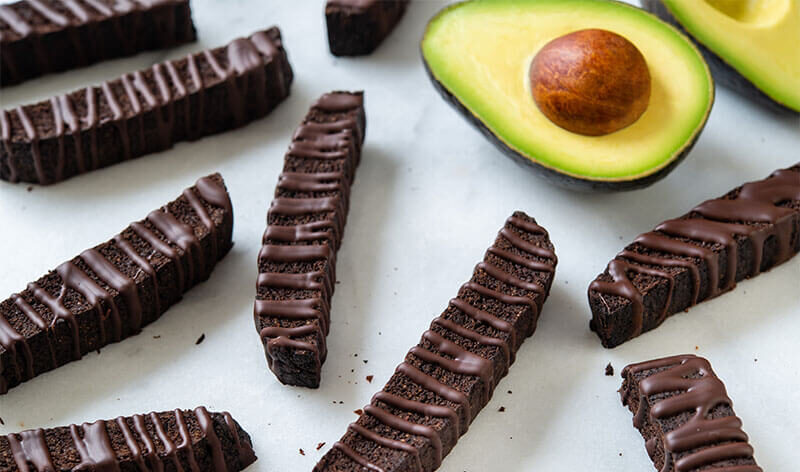
Use fresh avocados to replace baking ingredients that are high in saturated fat.
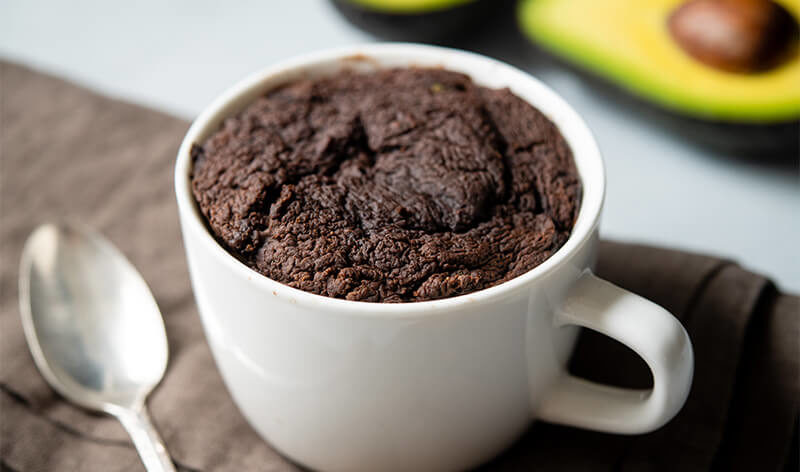
Due to their creamy texture, most standard baking ingredients that are high in saturated fat can be substituted one to one for pureed avocado. If your recipe calls for a half cup of an ingredient that is high in saturated fat, replace it with half a cup of pureed avocados to lower your intake of saturated fat.
The American Heart Association recommends eating less nutrient-poor foods and limiting the amount of saturated fat, added sugars, and sodium. The majority of the fat in one’s diet should be unsaturated; the predominant fat in avocados is unsaturated (good) fat. This makes avocado a great alternative in baking, and the high-water content means that your baked goods will remain moist. Aside from the nutritional benefits, avocado is also useful if you are looking for a vegan substitute in baking.
Try these taste bud-approved baking recipes to help reduce your intake of saturated fats:
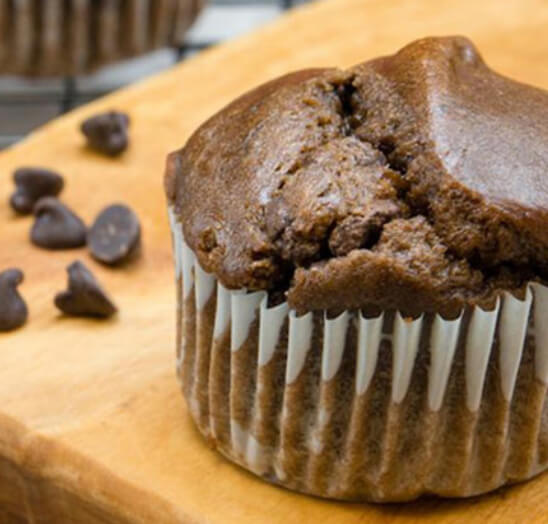
Mexican “Hot Chocolate” Spiced Avocado Mini Muffin Bites
Chocolate + fresh avocado + cayenne = a chocolatey muffin bite with a kick and only 1 gram of saturated fat per serving.

A nutrient-boosted tasty treat with only 0.5 grams of saturated fat per serving.

Avocado Oatmeal Breakfast Cookies
A delicious recipe for cookies that only contain 1 gram of saturated fat per serving.

Vegan Dark Chocolate Avocado Cupcakes
Fresh avocados make for an irresistible velvety chocolate cupcake and icing that fits into a vegan diet.
Baking Ingredients Nutritional Comparison2
FRESH AVOCADO
Serving Size: 1/3 of a medium avocado (50g)
Calories: 80
Total Fat: 8g
Sat Fat: 1g
Cholesterol: 0mg
Sodium: 0mg
BUTTER, UNSALTED
Serving Size: 1 Tbsp
Calories: 100
Total Fat: 12g
Sat Fat: 7g
Cholesterol: 30mg
Sodium: 0mg
SHORTENING
Serving Size: 2 Tbsp
Calories: 113
Total Fat: 13g
Sat Fat: 3g
Cholesterol: 0mg
Sodium: 0mg
MARGARINE
Serving Size: 1 Tbsp
Calories: 100
Total Fat: 11g
Sat Fat: 2g
Cholesterol: 0mg
Sodium: 105mg
CREAM CHEESE
Serving Size: 2 Tbsp
Calories: 100
Total Fat: 10g
Sat Fat: 6g
Cholesterol: 30mg
Sodium: 105mg
CANOLA OIL
Serving Size: 1 Tbsp
Calories: 120
Total Fat: 14g
Sat Fat: 1g
Cholesterol: 0mg
Sodium: 0mg
Reference:
1. USDA National Nutrient Database for Standard Reference, Release 28 (2018) Spread & dip nutrition data given for butter, salted; sour cream, cultured; margarine, regular, 80% fat, composite, tub, with salt; cheddar cheese; and salad dressing, mayonnaise, regular.
2. USDA National Nutrient Database for Standard Reference, Release 28 (2015) Baking ingredients nutrition data given for butter, unsalted; Shortening, household, soybean (hydrogenated) and palm; margarine, regular, 80% fat, composite, stick, with salt; cheese, cream; and canola oil, UPC: 858005002211.
Explore More Dips and Baking Recipes With Avocados


You May Also Like

Avocado "How-To"
LEARN HOW TO PICK, STORE, AND PREP FRESH AVOCADOS

NUTRITION FACTS LABEL
MORE THAN GREAT TASTE! DISCOVER THE HEALTH BENEFITS
